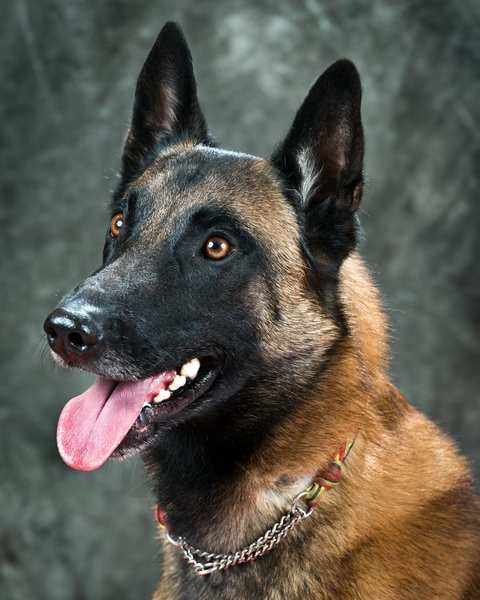
Belgian Malinois Exercise Needs: The Real Requirements Behind That Endless Energy
If you think a Belgian Malinois can be tired out with a quick walk around the block, you're in for a rude awakening. This breed wasn't bred to lounge — they were developed as herding and working dogs in Belgium, and that genetics hasn't faded into history. Understanding what these dogs actually need is the difference between a well-balanced companion and a destructive, anxious, helicopter-energy nightmare.
The Hard Numbers: What Experts Recommend
According to discussions in the Belgian Malinois community and working dog trainers, these dogs require significantly more exercise and mental stimulation than most breeds. Here's what the experts recommend:
- Daily exercise: 2-4 hours of vigorous activity minimum
- Mental stimulation: 1-2 hours of focused work or puzzle activities
- Total daily commitment: 3-6 hours of dedicated engagement
One Reddit user in r/BelgianMalinois summed it up perfectly: "If you want a dog that will sleep while you work, don't get a Malinois. These dogs need a job, and if you don't give them one, they'll find one — and you won't like what they choose."
Physical Exercise: Beyond the Leash Walk
A simple leash walk won't cut it. Belgian Malinois need activities that engage their entire body and mind:
High-Intensity Activities
- Running or jogging: 3-5 miles, 3-4 times per week minimum
- Fetch with intensity: Not lazy toss — we're talking 100+ throws, full sprints
- Swimming: Low-impact but excellent for joint health
- Hiking: Particularly on rugged terrain that requires focus
- Bikejoring: Let them run alongside a bicycle (start slow!)
Sports and Work
- IPO/IGP: The gold standard for working Malinois
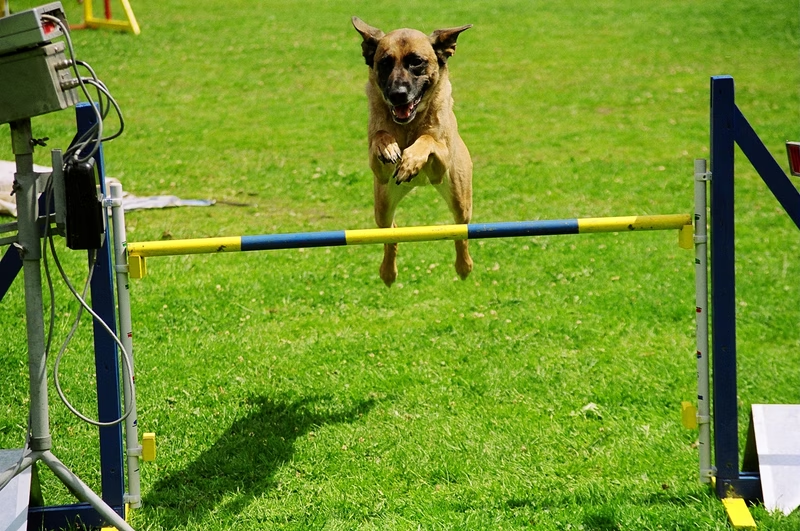
- Agility: Excellent for mental and physical exercise
- Dock diving: Great for dogs who love water
- Frisbee: The breed excels at disc dog sports
"My Malinois does 2 hours of off-leash running every morning before I leave for work, plus 1-2 hours of training and play in the evening. On weekends, we do 4-5 hour hiking trips. That's what's required." — Working Malinois owner
Mental Stimulation: The Secret to a Calm Malinois
Here's what many owners miss: physical exercise alone won't tire out a Malinois. Their brains are as athletic as their bodies, and an understimulated Malinois is a problem Malinois.
Required Mental Work
- Obedience training: 15-30 minutes, 2-3 times daily
- ** Nose work**: Hide treats around the house or yard
- Puzzle toys: Kongs, snuffle mats, puzzle feeders
- Training new tricks: Never stop teaching — it keeps them sharp
- Job simulation: Carry a backpack, guard a door, check perimeter
One experienced handler told the community: "A tired Malinois is one that's been worked mentally, not just physically. I've seen dogs run all day and still be wired. But an hour of focused training? That's what actually flips the switch."
Signs Your Malinois Isn't Getting Enough
How do you know if your Malinois is under-exercised? Watch for these behavioral red flags:
- Destructive behavior: Chewing furniture, digging holes, destroying toys within minutes
- Hyperactivity: Unable to settle, pacing, constantly moving
- Obsessive behaviors: Shadowing, fixation on moving objects
- Aggression: Resource guarding, reactivity, defensive behavior
- Anxiety: Separation anxiety, noise phobia, general nervousness
- Excessive barking: Especially if it seems to have no trigger
"The difference between a good day and a bad day with my Malinois is about 90 minutes of dedicated exercise and training. Skip it, and I have a Tasmanian devil. Do it, and I have the most chill dog ever." — Owner on r/BelgianMalinois
The 'Off Switch' Myth
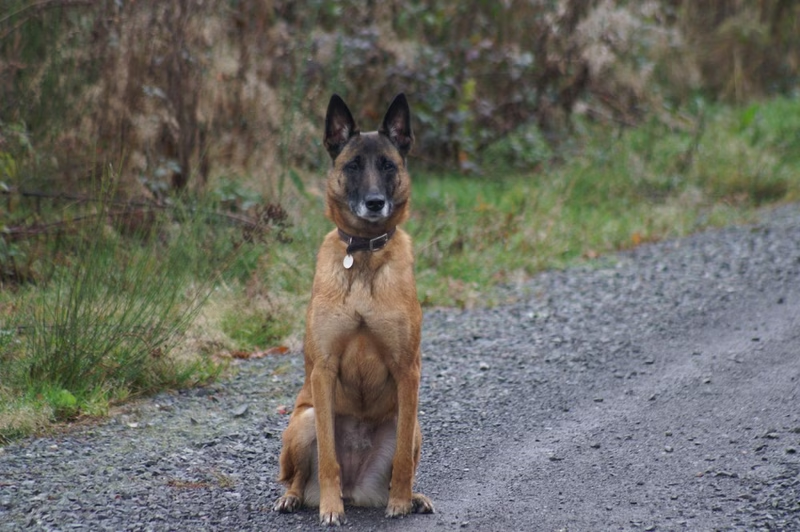
You've probably heard about the elusive "Malinois off switch" — the idea that with enough training, your Malinois can turn off their energy and relax like a Labrador. Here's the truth: it exists, but it's not a default setting.
The off switch must be trained, and it comes at the end of maturity (usually 3-5 years) and extensive work. It also requires that the dog has had their exercise needs met first. You cannot expect a Malinois to settle if they're still vibrating with unused energy.
Strategies that work:
- Enforce rest periods after exercise
- Teach "place" or "settle" as a trained command
- Use crate time as scheduled rest (not punishment)
- Maintain consistent daily routines
Creating a Sustainable Routine
The best approach is building a routine that you can maintain long-term:
Sample Daily Schedule
| Time | Activity | Duration |
|---|---|---|
| 6:00 AM | Morning run or play session | 45-60 min |
| Breakfast | Slow feeder + training practice | 15 min |
| Midday | Walk + mental stimulation (if possible) | 30 min |
| Evening | Training class or intense play | 60-90 min |
| Before bed | Calm settling exercise | 15 min |
Weekend: Replace midday activity with 2-4 hour adventure (hiking, swimming, sports)
What Happens When You Get It Right
The payoff for meeting these needs is immense. A properly exercised and stimulated Belgian Malinois is:
- Confident and stable
- Eager to please
- Protective but manageable
- Calm in the house
- A joy to train and live with
One owner described it: "People see my Malinois and think he's lazy because he sleeps all day. What they don't see is the 4 hours of work I did that morning. He earned that rest."
The Bottom Line
Belgian Malinois are not for people who want a casual pet. They're for owners who are ready to commit to a lifestyle, not just a pet. If you're considering this breed, be honest about whether you can meet these requirements for the next 10-14 years.
The breed rewards dedication with unwavering loyalty and incredible capability. But they demand a partnership — not ownership.
Ready to commit? Browse our breeder directory to find a reputable source, or explore our protection dog resources if you're interested in working applications.